TRANSFORMING WASTE TO SUSTAINABLE AVIATION FUEL
Honeywell's new FT Unicracking™ technology converts Fischer-Tropsch liquids and waxes from waste into ASTM-approved sustainable aviation fuel (SAF).
Honeywell's new FT Unicracking™ technology converts Fischer-Tropsch liquids and waxes from waste into ASTM-approved sustainable aviation fuel (SAF).
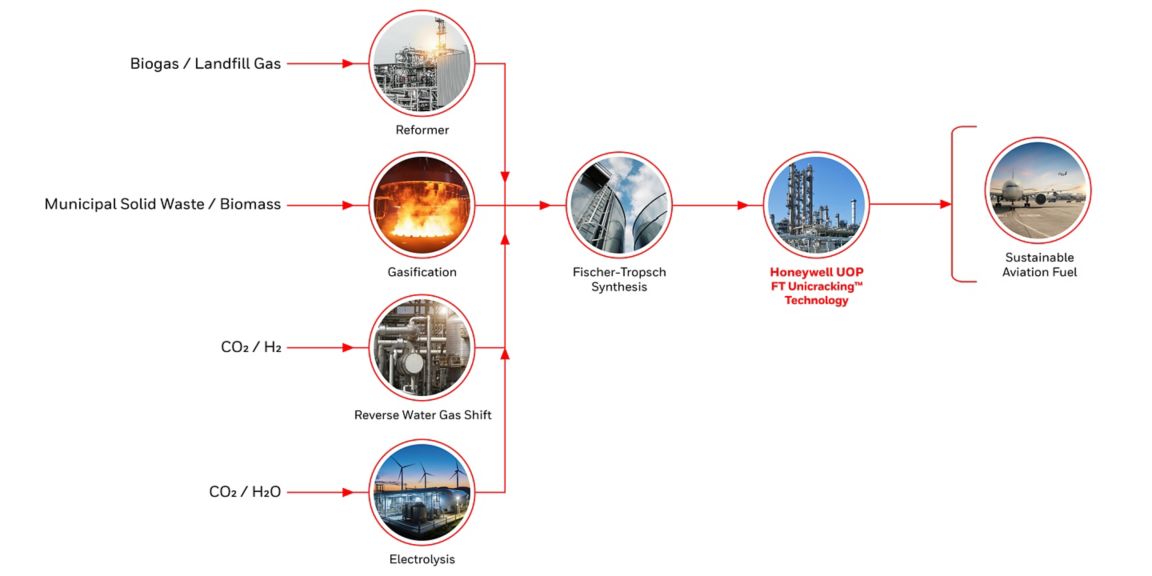
Leading the way in Fischer-Tropsch (FT) hydrocracking technologies, Honeywell's new FT Unicracking process uses a combination of proprietary, commercially proven, highly selective hydrocracking and hydroisomerization catalysts to produce 3-5% more sustainable aviation fuel (SAF)1,2, reduce by-product waste and achieve up to 20% cost reduction compared to other commonly used FT-hydrocracking methods.3,4 FT Unicracking, which can be used both for new units or retrofits, is Honeywell’s latest addition to its Renewable Fuels technology portfolio consisting of the industry leading Ecofining™ suite of solutions, Ethanol-To-Jet and UOP eFining™ (Methanol-to-Jet).
FT Unicracking converts liquids and waxes from multiple waste sources into Fischer-Tropsch Synthetic Paraffinic Kerosene (FT-SPK) which is a form of SAF that has been ASTM D7566 approved since June 2009. Viable feedstock sources for FT liquids and waxes include agricultural and/or forestry waste, municipal solid waste, biogas and/or landfill gas, and CO2 combined with hydrogen. FT Unicracking is expected to significantly contribute to meet the growing SAF demand, as a flexible, highly selective, ASTM-approved pathway to SAF. It is a ready-now solution producing a lower carbon SAF product resulting in a high bankability score.

Higher SAF yield
Produce 3-5% more SAF2,3

Lower CAPEX
Enable a cost reduction of up to 20%3,4

Less waste
Reduce by-product waste streams

90% less carbon intensive1
Process waste biomass


While Honeywell is an industry leader in methanol to olefins processing with demonstrated oligomerization and hydrogenation technologies, our unmatched commercial and R&D experience and commitment to creating a sustainable future also extend to the following areas:

1Carbon intensity is based on ICAO CORSIA default lifecycle emissions values for CORSIA-eligible fuels, Table 1 - agricultural residues and forestry residues. Corsia Eligible Fuels - Life Cycle Assessment Methodology - Version 5 June 2022.
2By utilizing proprietary SAF selective Honeywell UOP hydrocracking and hydro-isomerization catalysts.
3By utilizing a Honeywell patent pending process configuration.
4Based on internal UOP cost (Estimated Erected Cost) analysis that compares a typical configuration with the patent pending configuration.