
Inside A Gigafactory: What Goes On in Battery Production Powerhouses
Here’s how lithium-ion battery gigafactories work and why these operations are more important than ever to an electrified world.
The way you commute and get around your city is bound to change as countries around the world strive to cut emissions.
That’s because transportation as a sector, including transport on land, sea and air, accounts for more than a third of carbon dioxide emissions from end-use sectors, according to the International Energy Agency.
One way to make progress in the transportation sector is moving the world toward greater use of electric vehicles (EVs).
The International Energy Agency indicates that global EV sales shot up from 1 to 10 million from 2017 to 2022. As demand increases for EVs, it’s important that they can be manufactured – along with the batteries that power them – efficiently and safely.
To ramp up EV adoption and manufacturing, we need more lithium-ion batteries – and that's where lithium-ion battery gigafactories come into play.
A gigafactory is where products and components are manufactured for industries moving toward electrification and a lower carbon footprint. The giga prefix, meaning giant or billions, refers to the storage capacity in watt hours in the battery cells they produce. In the case of automobile manufacturers, that mostly means lithium-ion batteries, the vehicles that run on them, and even equipment for charging stations.
What It’s Like in a Gigafactory
Gigafactories are generally massive, compartmentalized facilities where battery manufacturing is broken down into three main steps:
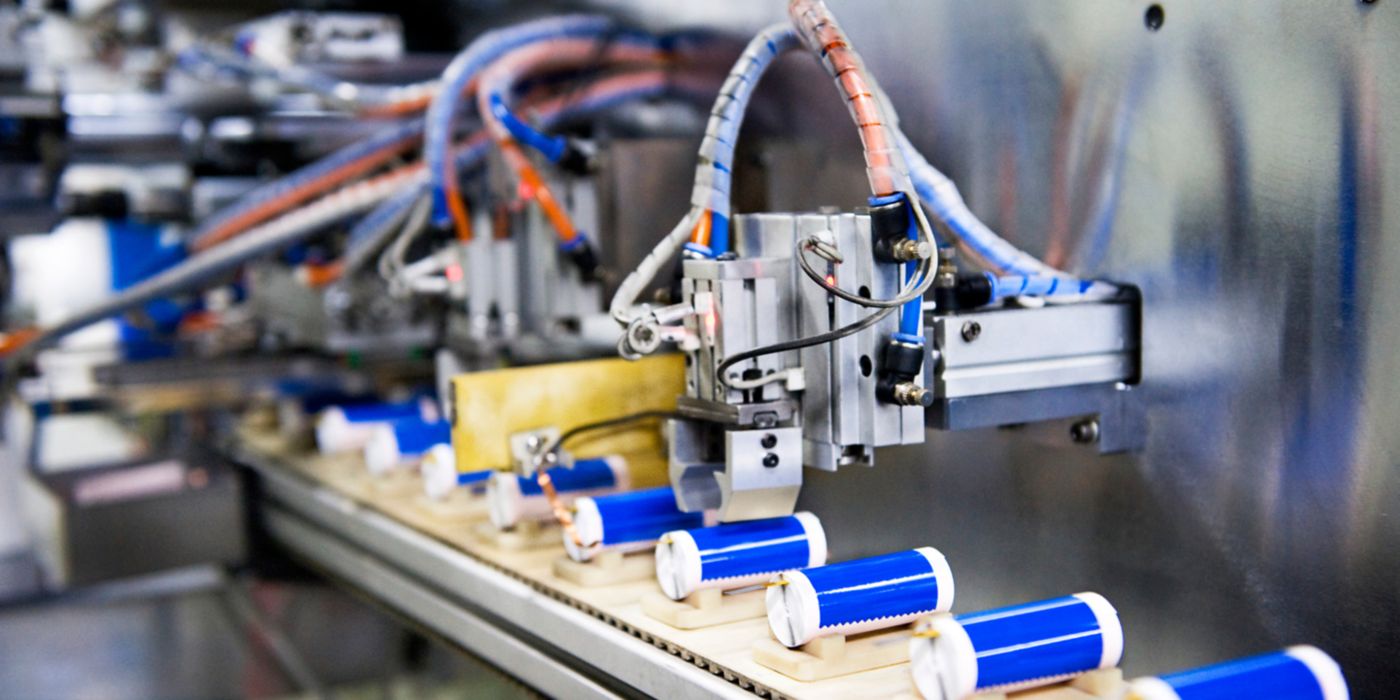
The process begins with the production of two electrodes: a cathode and an anode. This involves a series of steps starting with mixing, then proceeds downstream to coating, drying and finally pressing into a finished electrode (sheet).
Then, there’s a series of steps to assemble each cell. Discrete automation, assembly, and robotics combine to put everything together.
After that, there’s cell finishing, where cells are charged and discharged for the first time, which is conducted in a high-throughput warehouse-type environment.
The way that these processes are separated in gigafactories can present some unique challenges.
“The operators in one room usually don't know what's going on next door or what's going on 500 meters down the hallway downstream in the process,” said Alec Falzone, lithium-ion battery initiative leader at Honeywell.
That break in communication can add to the complexity of the gigafactory’s already large-scale operation.
The sheer size of gigafactories and massive number of employees add to the challenges involved in meeting the growing demand for electrification.
Running a gigafactory also requires operations leaders to address and prepare for the unique hazards presented by lithium-ion battery manufacturing. Employers need to have the right safety systems and protocols in place, as well as personal protective equipment (PPE) on hand, to help keep employees safe and to help stay compliant with local regulations.
“Workers in a gigafactory can be exposed to a number of risks, from electrical risks like burns, electric shock or arc flash to risks from exposure to continual loud noise,” said Shaun Ayres of Honeywell Personal Protective Equipment. “These individuals are critical to making electrification a reality, and its vital for companies to equip them with the appropriate protective gear they need to do their jobs both safely and comfortably.”

What Automation Can Do for Gigafactories
In addition to the need to optimize largely manual processes involved with electric vehicle manufacturing, another challenge is that the global lithium supply may not meet future EV demands, according to Reuters.
With the growing global demand for EVs requiring more lithium-ion batteries – and the scarcity of lithium – future-focused gigafactories are adopting software to minimize manual operations, give more visibility into their complex operations, and reduce the amount of production scrap throughout the process.
“Pulling together everything in a centralized and digital location is critical,” Falzone said. “What that does is it allows you to visualize and control what's going on in your gigafactory, downstream, midstream, upstream, all in a single place.”
Gigafactories and other manufacturing operations that rely on manual processes often have to pause production, manually extract and sift through data, and formulate a response when responding to issues.
With software-powered technologies, gigafactory decision-makers can be proactive – avoiding the need to stop and start production manually – and make corrections in real-time. This supports more efficient production of batteries to power your future EVs and, in turn, potential cost savings for the batteries being produced.
“The best way to reduce the cost of an electric vehicle is to reduce the cost of the battery pack,” Falzone said.
How Gigafactories Can Prioritize Safety and Efficiency
Meanwhile, gigafactories can prioritize more sustainable operations by cutting down on the amount of scrap material that needs to be shipped for recycling.
Additionally, having visibility to the various processes at play in a large gigafactory can help operations leaders be proactive on safety including individual respiratory concerns, along with preventing lithium-ion battery fires, which are rare but an important concern to address in the EV-powered future.
“The dangers of inhaling harmful particles, vapors and gases is very high in EV manufacturing, posing significant risks to the worker’s safety,” Ayres said. “Developing a proper respiratory program is essential to maintaining a safe working environment on an individual level.”
Sophisticated gas detection is also crucial to keeping workers safe in gigafactories. For another layer of safety, workers can carry portable gas detectors, which can warn them of exposure to gases or vapors, as well as low levels of oxygen.
“Gas and flame detection technology – particularly during electrode mixing, coating, drying and cell finishing – helps protect both people and assets within a gigafactory,” Ayres said. “Being able to monitor for potentially harmful or explosive substances helps facility leaders make fast and informed decisions in the event of a gas leak.”
Technologies like smart sensors that provide early warning pre-ignition can help mitigate “thermal runaway,” a safety hazard in lithium-ion batteries that can lead to fires. Data from sensors is then fed into a single software platform for gigafactories. Industrial-grade software can apply predictive analytics to help increase safety and support the prevention of downtime by intervening before key equipment fails.
Another area that requires a proactive approach is cybersecurity, which is core to the software platforms that Honeywell deploys in gigafactories. Once these hardware and software systems have been implemented, it is critical that they are protected from both internal and external threats to the network.
As for the improvements that can be made to gigafactories to help increase efficiency and safety, and boost EV adoption, it's a quickly emerging area of innovation for our engineers.
“It’s exciting to see high-volume manufacturing done in a really modern way where it hasn’t been done before and that we’re helping to enable it,” Falzone said.